Wagyu Marbling & Grading Guide
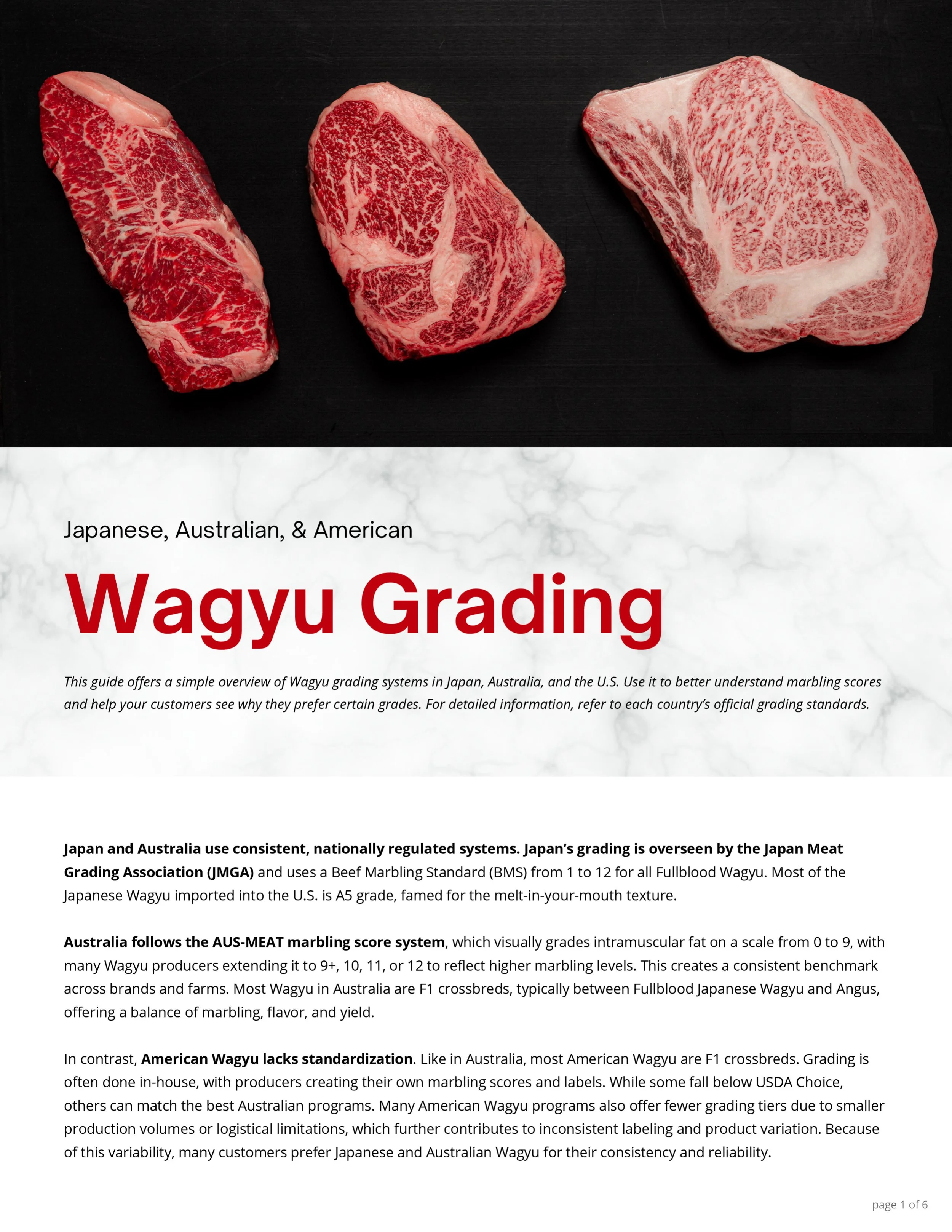
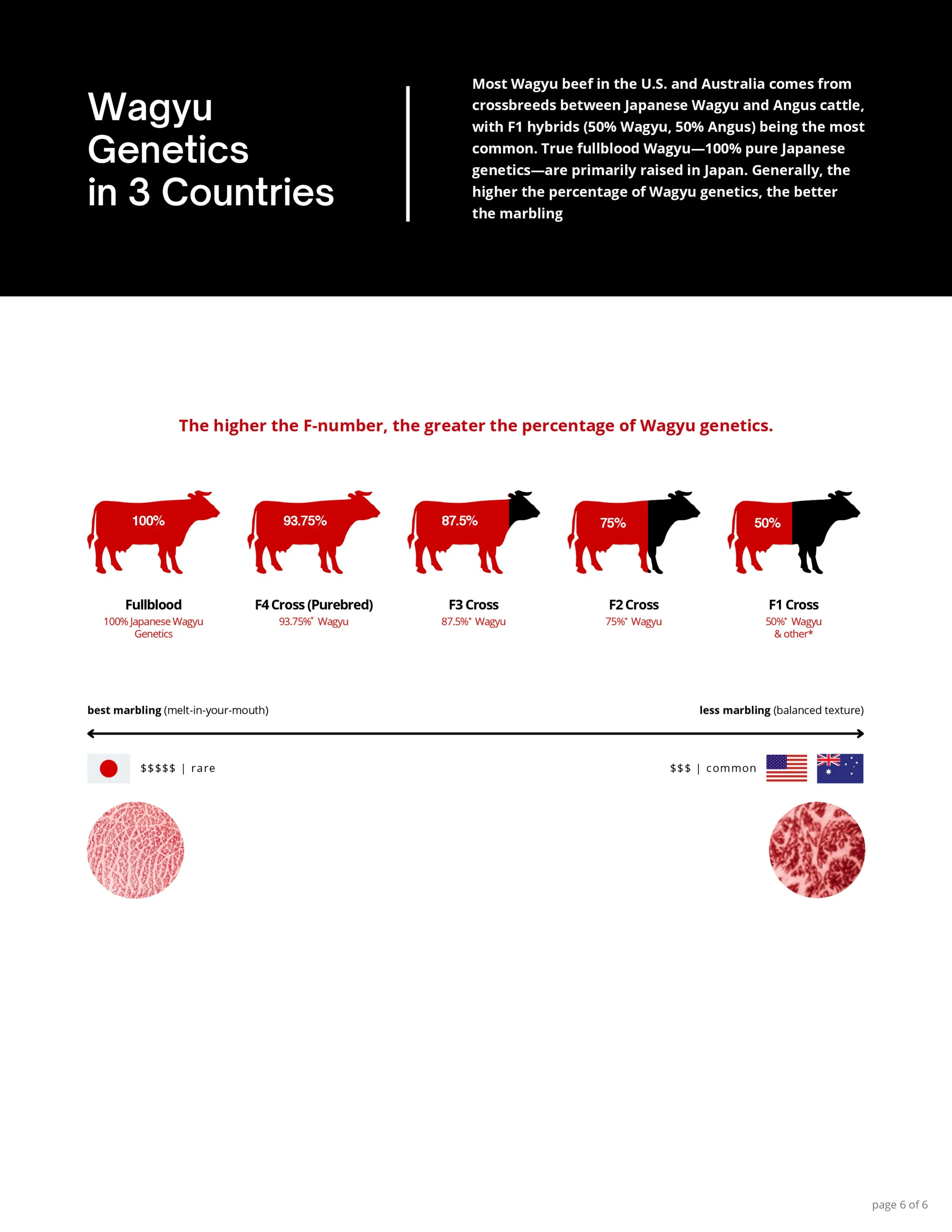
Marbling is the fat within the muscle that gives Wagyu its distinctive appearance. For wholesale buyers, understanding the grading label helps you compare options for a butcher counter, specialty market, or restaurant menu.
How the grading systems differ
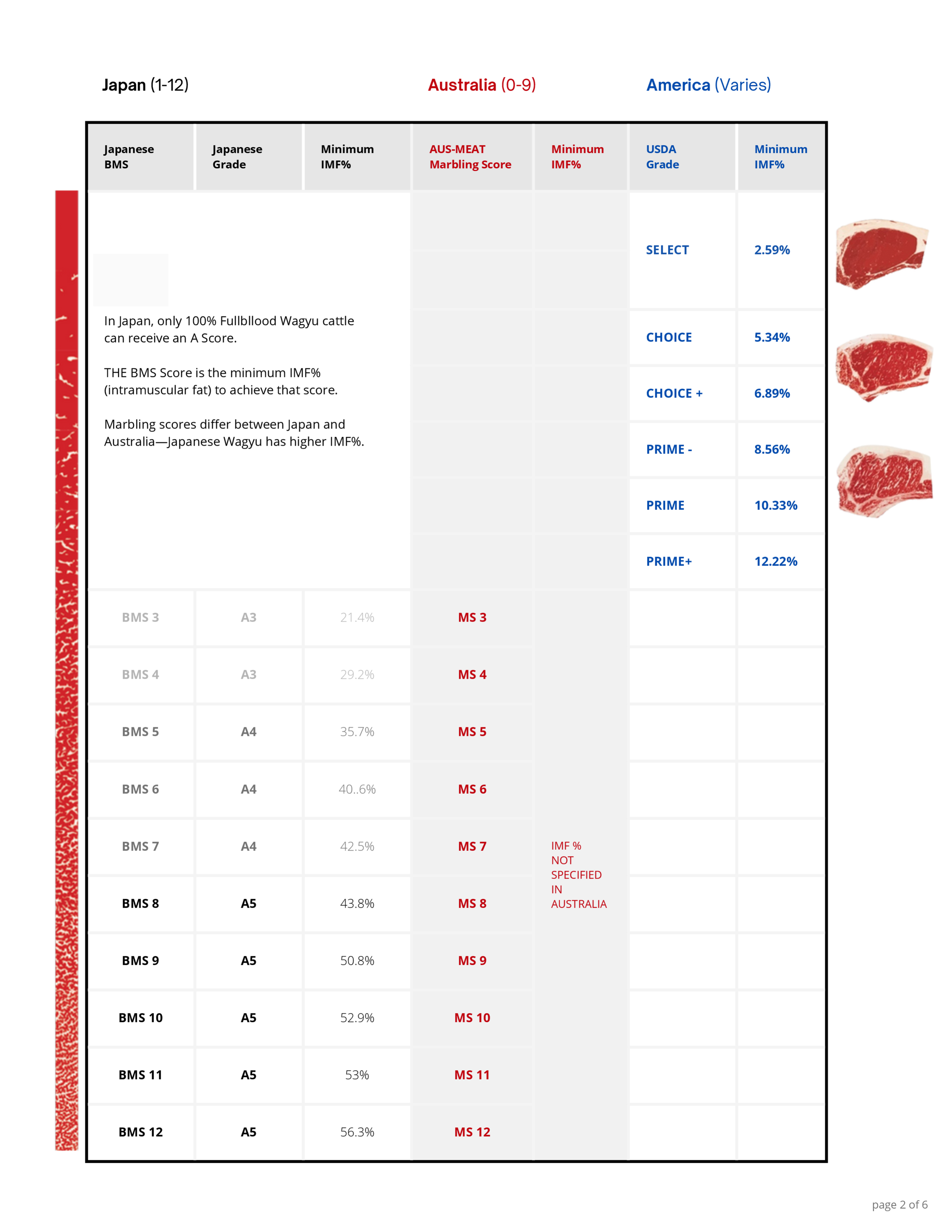
| Origin / system | What the label means | What to check |
|---|---|---|
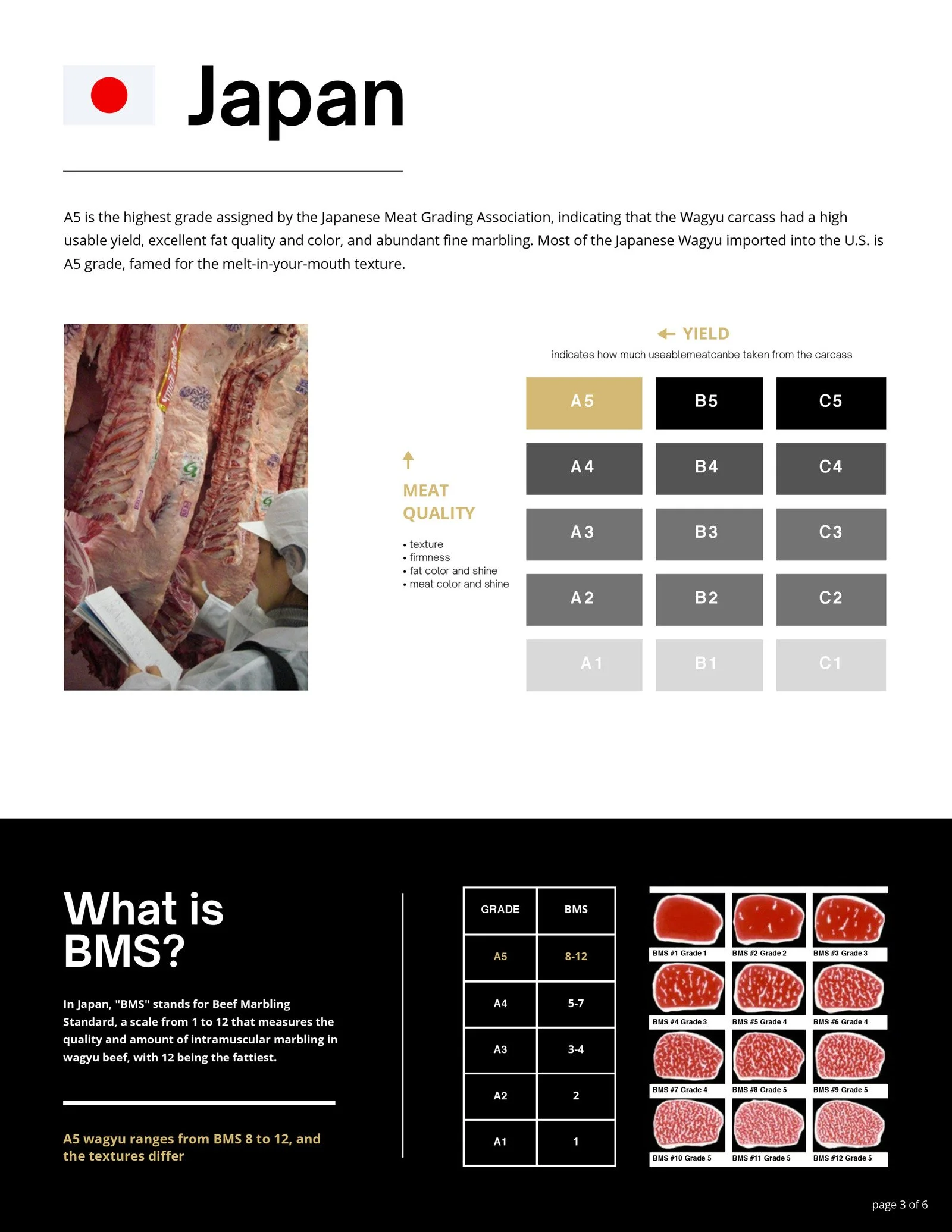
| Japanese Wagyu | Yield grades A–C and quality grades 1–5 combine in labels such as A5. A and 5 are the highest in their respective categories. | The letter describes yield; the number describes meat quality, including marbling, color, and texture. |
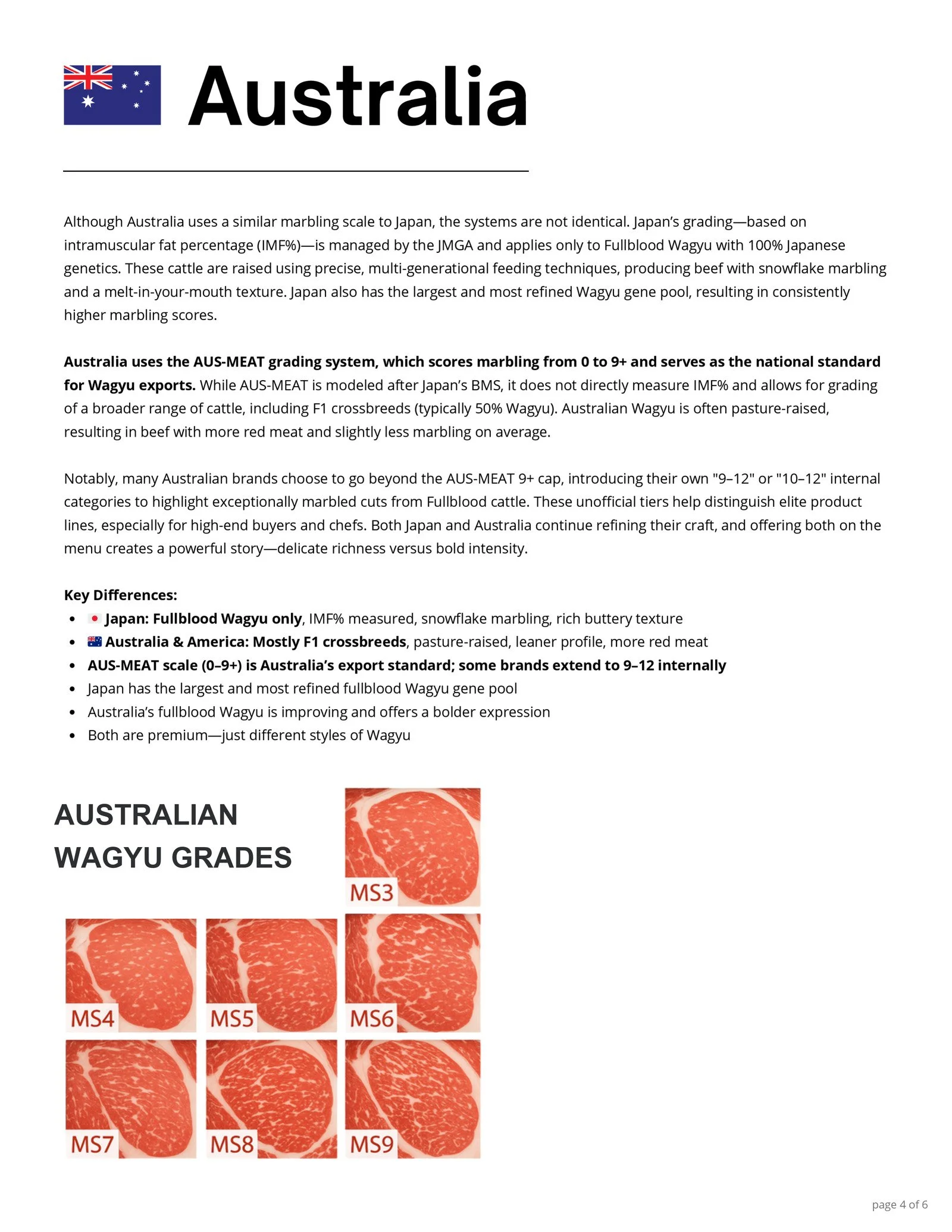
| Australian Wagyu | AUS-MEAT marbling scores are commonly presented as 0–9+, describing the amount of visible intramuscular fat. | Confirm the grading system used. AUS-MEAT and Meat Standards Australia (MSA) scores are different. |
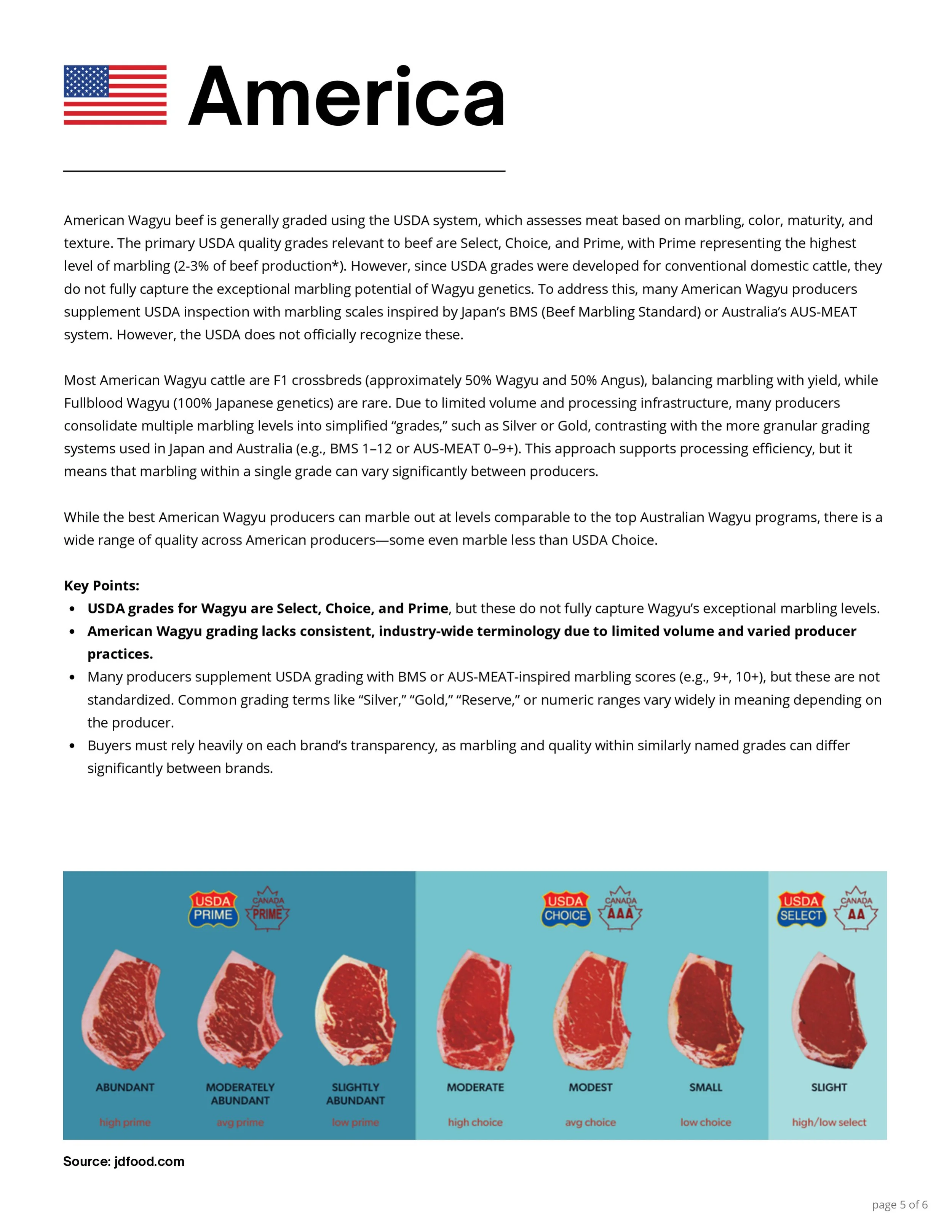
| USDA beef grades | Prime, Choice, and Select are quality grades that consider marbling and maturity. | Confirm the USDA grade separately from the product's Wagyu breed or genetics description. |
These systems measure different things. Treat comparison graphics as a general reference, not an exact conversion between Japanese grades, Australian scores, and USDA grades.
Choosing Wagyu for your business
Compare the producer and origin, stated grade, cut and trim, case weight, and current availability. Stonegate Protein Group supplies wholesale Wagyu to butcher shops, specialty markets, and restaurants nationwide.
Explore Japanese Wagyu and Australian Wagyu, or contact us to discuss the right products for your menu or meat counter.
Request AvailabilityGrading references: JETRO / JFOODO · Australian Wagyu Association · USDA